
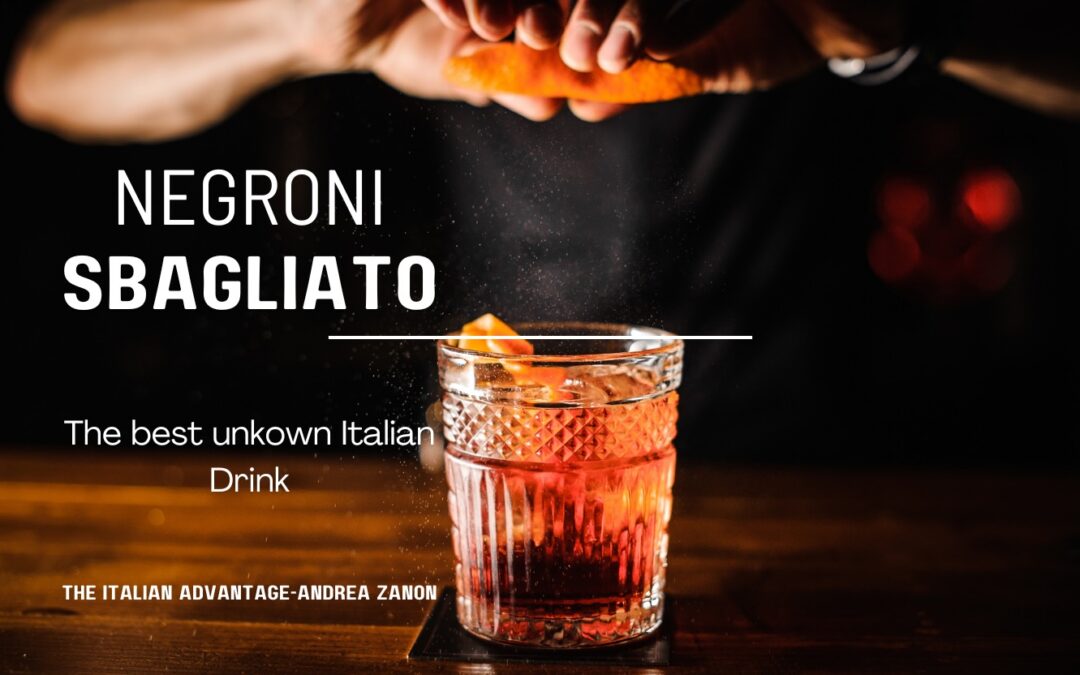
In 1968, a barista at Bar Basso in Milan reached for the gin and grabbed Prosecco by error. He made the drink, served it, and called it sbagliato. Wrong. The client drank it. Came back for another asking un altro giro (another round). The mistake never left the menu, the bar and the city of Milan. This bar is still one you should go for an aperitivo if you visit Milan.
The Negroni Sbagliato is today one of the most elite aperitivo drinks in the world. Campari, sweet vermouth, Prosecco on the rocks. No gin. No correction. Just the Italian Advantage. No apology for the change from the original formula. Italy looked at the accident and decided it was better than the original plan.
This is not a cocktail story or a bar story. It is an economic and cultural story about how Italy create spontaneous value that other markets cannot easily reverse engineer.
The Anglo-American business model treats mistakes as problems to be corrected, minimized, and written out of the official record. Quarterly earnings calls are exercises in narrative control. Deviations from plan are explained away. The instinct is to return to the original formula as fast as possible and pretend the detour never happened.
Italian culture operates on a different logic. The concept of arrangiarsi, making do and finding a way through improvisation, is not a fallback position. It is part of the Italian lifestyle. When the wrong bottle gets grabbed, the Italian instinct is not to apologize. It is to taste it and decide if it is better than the plan. Sometimes it is. The Negroni Sbagliato is a real proof.
This matters for anyone reading geopolitical and economic signals coming out of Southern Europe. Italy’s small and medium enterprise sector, the backbone of its export economy, has survived currency devaluation, political instability, global recessions, and supply chain disruptions that would have shut down other less resilient societies. The resilience is not accidental. It is cultural. It is part of the language, in the daily aperitivo, in the willingness to serve the mistake and put it on the permanent menu.
For business leaders managing an era of AI and robotics disruption, supply chain fragmentation, and geopolitical realignment, the Italian model offers something the efficiency-obsessed Anglo-American framework does not: a genuine comfort with productive deviation. The willingness to taste the mistake before throwing it away.
The countries and companies wining over the next decade will not be the ones that executed the plan with the most precision. They will be the ones that recognized the Prosecco moment when it happened and had the cultural confidence to call it a feature.
In Milan they call it sbagliato. In most boardrooms they call it a problem.